



Sky blue
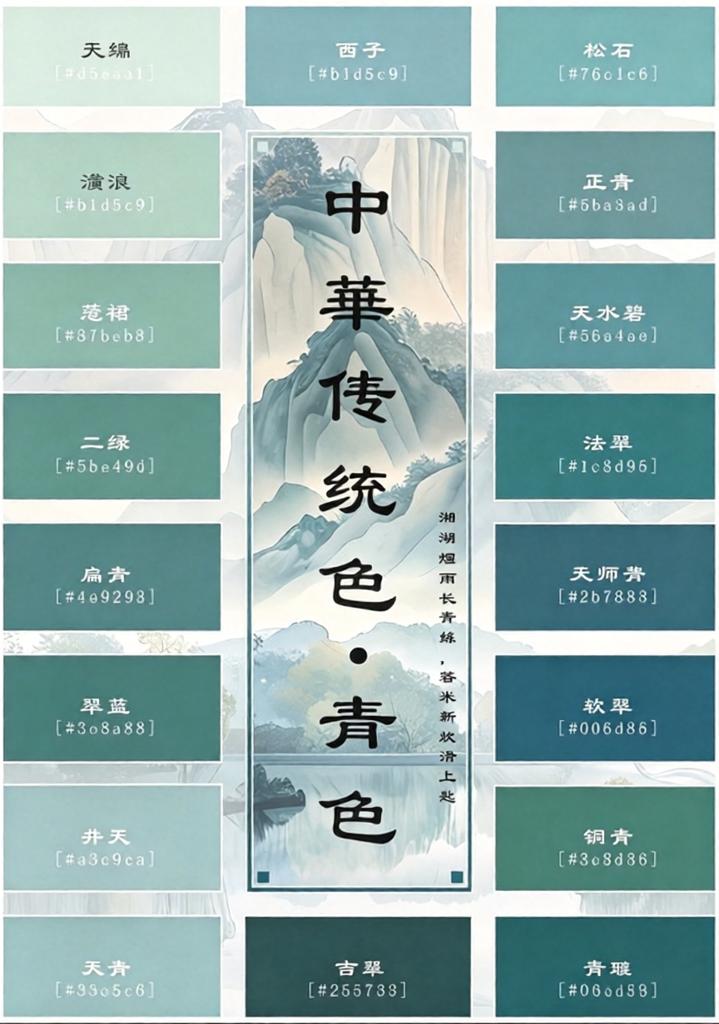
Celadon refers to the color of a particular type of ceramic glaze. Ru ware celadon has a subtle greenish-blue hue, with a distinctive freshness and refined elegance. Combined with Ru ware’s distinctive texture and production techniques, this color gives it its characteristic aesthetic.

Celadon is one of the signature colors of Ru ware ceramics from the Song dynasty. Ru ware was one of the Five Great Kilns of the Song dynasty and was especially favored by Emperor Huizong. Legend has it that the celadon hue originated in a dream of Emperor Huizong’s: after a rainstorm had passed, the clouds parted and the sky remained faintly hazy. In his dream, he saw this distinctive shade of blue-green. Upon waking, he ordered Ru kiln artisans to make ceramics in that color.

In fact, celadon is not a single color, but a range of hues. When discussing Ru ware, people in the Song dynasty used terms such as celadon, pale celadon, and egg white to describe its colors. These somewhat imprecise descriptions were used because Song dynasty Ru ware glazes took their cues from natural phenomena. Celadon is, in essence, the color of the sky.
When you look up at the sky, you will notice that its color shifts from the horizon to the heavens. Celadon is therefore not one color, but a range of hues. Today, among Ru ware pieces excavated from kiln sites or preserved examples displayed in museums, almost no two have exactly the same glaze color. This variety of blue-green hues is mainly due to the uncertain natural changes that occur in the glaze as kiln temperatures fluctuate during firing. This process is known as “kiln transformation.”

Today, among Ru ware ceramics unearthed at kiln sites or preserved pieces displayed in museums, there are almost no works with exactly the same glaze color. The main reason for this wide variety of blue-green hues is that, as kiln temperatures fluctuate during firing, the glaze undergoes unpredictable natural changes. This process is known as “kiln transformation.”

Therefore, when appreciating Ru ware, there is no need to define it by a single shade of “blue-green” in advance. Colors in nature are inherently varied and ever-changing. More than its color, the essence of Ru ware lies in its warm, jade-like glaze and delicate texture. Chinese people have revered jade since ancient times, seeing it as a symbol of the virtuous gentleman; this is why people in the Song dynasty held Ru ware in such special regard.