



Glaze color
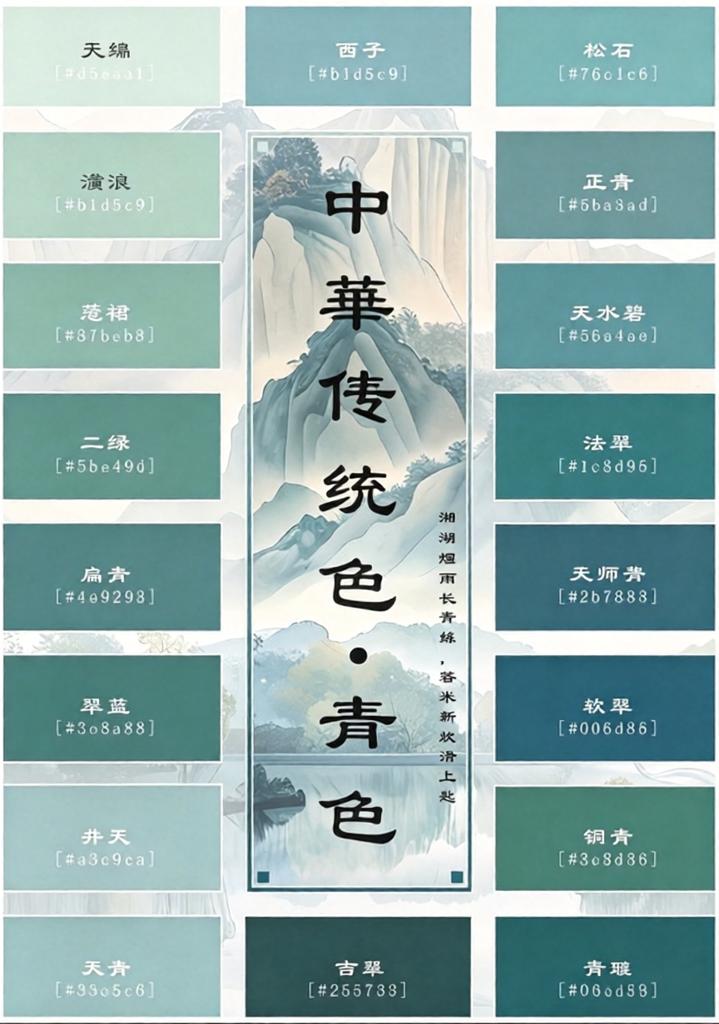
Celadon is not a single color, but a range of hues. When discussing Ru ware celadon, people in the Song dynasty used terms such as “sky blue,” “pale sky blue,” and “egg white” to describe its colors.
The reason for using such broad terms is that the colors of Song-dynasty Ru ware arose from natural phenomena. Sky blue is, in fact, the color of the sky. When we look up, we see the sky’s color shifting continuously from the horizon to the heavens. Thus, sky blue is not a single color, but a spectrum of hues.
Even among Ru ware celadon unearthed at kiln sites or displayed in museums today, no two pieces have exactly the same glaze color. This diversity of blues is largely due to changes in kiln temperature during firing, which naturally alter the glaze on the surface of each piece. This phenomenon is known as “kiln transmutation.”
Therefore, when appreciating Ru ware, there is no need to use “blue” as a fixed standard. Nature’s colors are inherently diverse. More than its color, the essence of Ru ware lies in its warm, jade-like glaze.
Since ancient times, the Chinese have revered jade as a symbol of the virtuous gentleman. This is why people in the Song dynasty were especially fond of Ru ware celadon.
Sky Blue
Ru ware celadon glaze incorporates agate and is characterized primarily by its sky-blue hue. Agate creates bubbles of varying sizes and orientations within the glaze, causing the color to shift under different lighting and from different angles.
-
In bright light: The glaze appears blue with a hint of yellow, like the deep blue sky after rain.
-
In dim light: The glaze appears blue with a hint of green, like clear lake water.

Sky-Blue Glaze
Sky-blue glaze evolved from sky blue. It is pale blue, highly translucent, and elegant.
-
In the 17th century, the costume worn by the lead character, Sarah Wong, in a French stage play was similar in color to Ru ware sky-blue glaze and was widely praised by audiences. Thereafter, Ru ware celadon also came to be known in Europe as “Saraton.”
-
An ancient text states: “Sky blue is the most prized, powder blue is acceptable, and sky-blue glaze is especially precious.”

Bean-Green Glaze
Bean-green glaze is pale green and translucent, with a fresh, delicate hue reminiscent of freshly picked peas.
-
Its high translucency allows designs such as fish, ripples, and flowers to be carved or decorated onto the body, giving the pieces a lively and distinctive character.
-
Effect of lighting: In bright light, tiny particles on the glaze reflect white light, making it appear “green with a hint of white”; in dimmer light, the color looks closer to pure green.
-
Crazing: At first, cracks form rapidly and in abundance after firing. They continue to develop during later use, creating a natural crackle pattern.

Moon-White Glaze
“Moon white” was originally the name of a color used for ancient textiles, falling between pale blue and medium blue.
-
During the Song dynasty, moon-white glaze was one of the glaze colors used for Ru ware. It is milky white and paler than sky-blue glaze. Iron compounds were used primarily as the colorant, and the slightly thick glaze has a hazy hue like bright moonlight.
-
Effect of lighting:
-
In bright light: The glaze feels smooth and lustrous, like fat, and radiates a soft, jade-like sheen.
-
In dim light: The glaze has a serene, natural appearance, like a gemstone in the dark, occasionally revealing its precious glow.

-