

Jade-like texture
Confucian thought in China during the Song dynasty developed into Neo-Confucianism. Some scholar-officials advocated comparing jade to virtue, and even began judging the quality of ceramics by the aesthetic standards of jade. This also laid the theoretical foundation for Ru ware celadon’s pursuit of a jade-like quality.
Ru ware made for the imperial court spared no expense, adding agate to the glaze to achieve jade’s warm, lustrous quality. This brought Ru ware celadon to the pinnacle among the Five Great Kilns of the Song dynasty. Its quality of “resembling jade yet surpassing it” became one of the key features appreciated in imperial Ru ware.
 The ancients revered natural jade, and people in the Song dynasty were no exception. Ru ware’s glaze ideally recreates the texture of jade, reflecting both an aesthetic pursuit and boundless reverence for moral character.
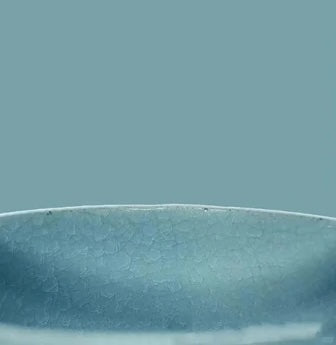
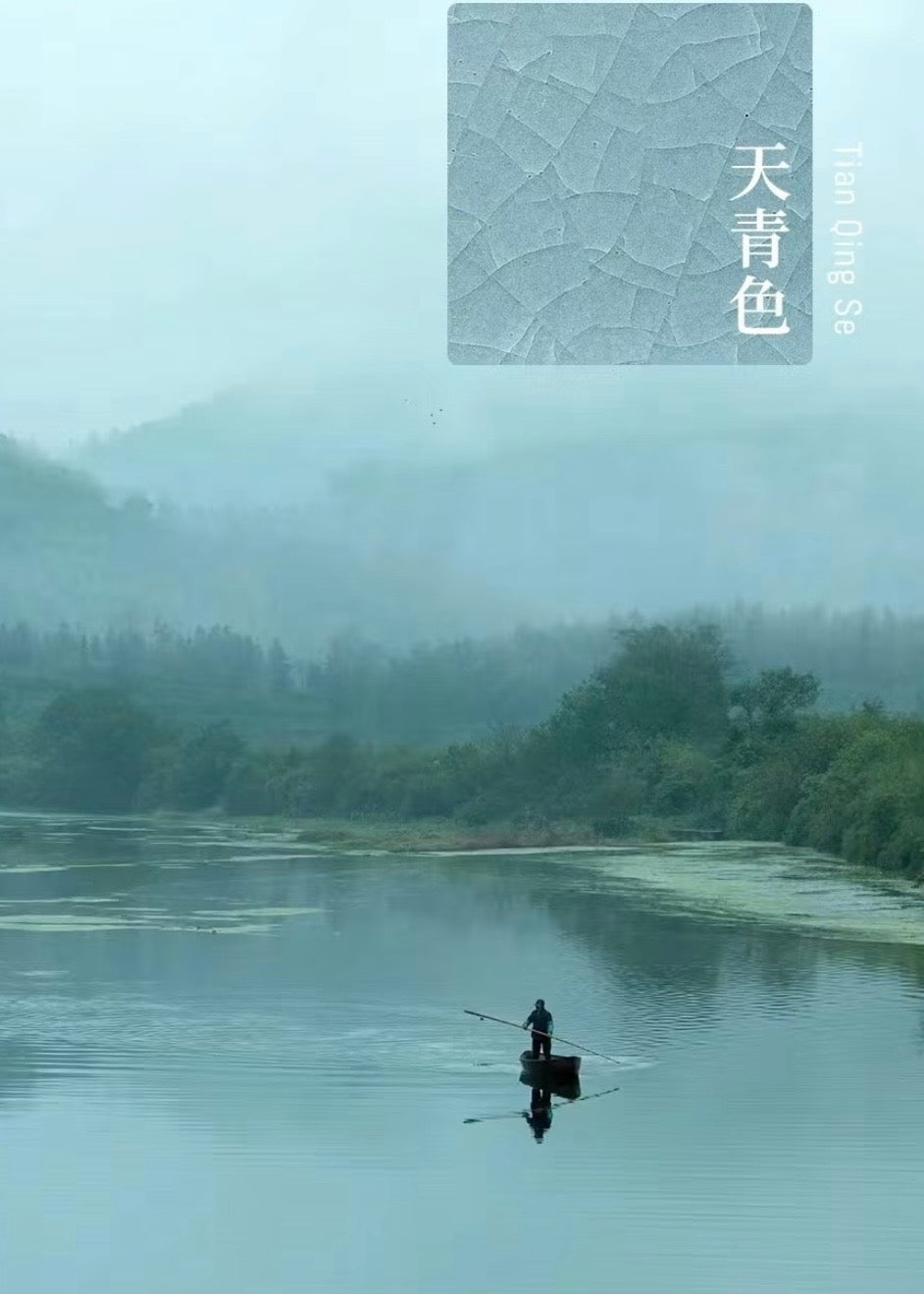
Ru ware glaze is opaque and milky rather than fully transparent, yet it has the texture of jade, with a “treasure-like glow” emanating from within the glaze. This is the result of firing Ru ware’s sky-blue glaze to perfection, and represents the ideal expression of its glaze quality and luster.

The number, size, and distribution of bubbles within the glaze directly affect its warm, lustrous quality.
Under a high-magnification microscope, bubbles of varying sizes can be seen scattered throughout the Ru glaze like stars. On some pieces, the bubbles in the glaze are so conspicuous that they can even be seen with the naked eye.
When light falls on the glaze, the bubbles refract it and diffuse the light within the glaze, helping create a jade-like quality and shimmering, treasure-like glow.
